


Application
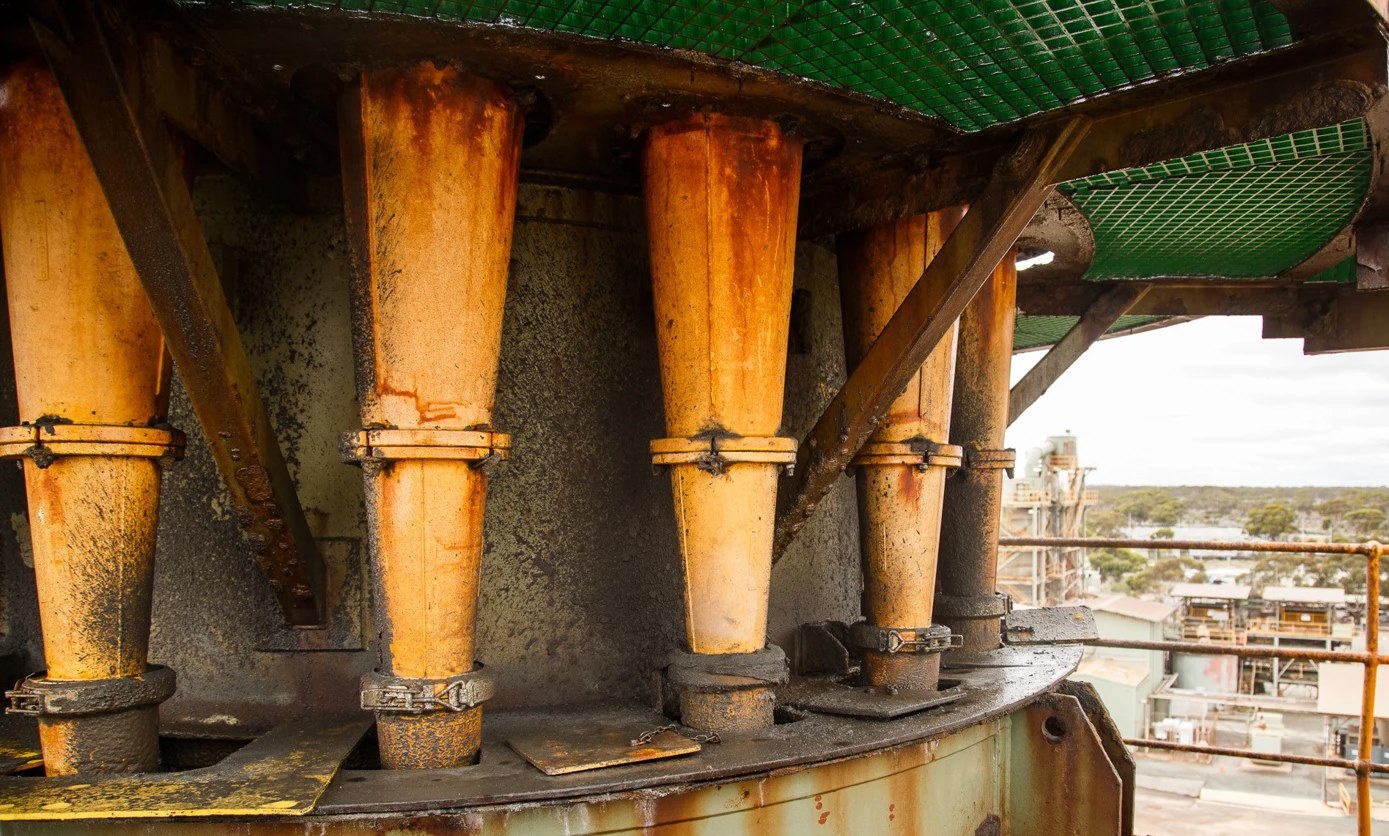
The apex, or spigot, is the cyclone’s underflow outlet and one of its most exposed wear points. Abrasive slurry passes through a small opening at high velocity. As the liner wears, the effective apex diameter can increase and the split between water and solids changes.
That change can appear as a gradually more dilute underflow, a change in underflow solids content, or a shift in the relationship between cyclone pressure and density. The same signals can also move because of ore properties, feed rate, water addition, pump behaviour, cyclone selection, roping, instrumentation drift or a change in operating strategy. A useful wear estimate therefore needs to separate the liner signal from the rest of the process.
Minealytics Cyclone Apex Liner Wear Estimation uses historian data and inspection records to build a site-specific condition indicator. It can help operations decide when to inspect an apex, prioritise a cyclone in a bank, and plan a liner change before performance or product quality is affected.
What the process is telling you
Under stable feed and cyclone configuration, liner wear changes the hydraulic geometry of the underflow outlet. A worn apex generally allows more liquid to leave with the underflow, so underflow density or percent solids can trend down. The cut and solids split may move with it, which can affect overflow quality, circulating load and downstream water balance.
Pressure is part of the explanation, not a standalone wear measurement. Increasing inlet pressure changes slurry velocity and separation behaviour. A model that looks only at pressure or only at underflow density can mistake a normal process change for wear. The useful signal is the residual: how the observed underflow response differs from the response expected for the current pressure, feed, water, cyclone configuration and ore regime.
The model can combine signals such as:
- underflow density or percent solids, from online measurement or reconciled samples;
- cyclone inlet pressure, feed flow and feed density;
- pump speed, current or load, sump level and water addition;
- active cyclone count, cyclone identity and known apex or vortex-finder changes;
- underflow vibration or discharge-pattern vision where available;
- feed rate, particle-size proxies, ore type and laboratory results where available;
- inspection dates, measured apex dimensions, liner material and replacement history.
Time-series prediction for wear
The wear signal is usually slow compared with normal cyclone fluctuations. A time-series model can learn both behaviours at once: short-term process dynamics and the longer-term drift associated with liner condition.
The workflow is site-calibrated:
- Align historian tags, samples, operating states, cyclone selection and maintenance events on one time axis.
- Learn the normal density and pressure response for each relevant operating regime.
- Calculate a condition residual and smooth it over an appropriate operating window so individual noisy samples do not trigger a maintenance decision.
- Detect persistent drift or a change point after accounting for feed, pressure, water and configuration changes.
- Compare the estimated condition with inspection and replacement records, then forecast the likely time to an agreed inspection or replacement threshold.
The output is not a claim that the model has measured liner thickness. It is an evidence-based estimate of changing hydraulic behaviour, with a confidence band, contributing signals and the operating conditions in which the estimate is valid. Physical inspection remains the reference for confirming the actual apex condition.
From warning to maintenance decision
The dashboard can show a health index for each cyclone, the trend in pressure-conditioned underflow response, the estimated wear rate and the forecast window for inspection. A maintenance alert can be raised when the drift is persistent and the forecast reaches a site-approved limit, rather than when a single density reading crosses a generic threshold.
The result can support:
- prioritised inspection of individual cyclones in a bank;
- planned apex and liner replacement during an existing maintenance window;
- comparison of liner materials, cyclone duty and operating regimes;
- earlier investigation of unexplained density or product-quality changes;
- a record of inspection evidence that improves the next model calibration.
Integration and operating boundaries
The first deployment is normally monitoring and maintenance advice. The estimate can be displayed in an operator dashboard and passed to the approved historian, alarm or maintenance workflow. A site may later use the health signal in a supervised optimisation layer, but pressure or cyclone-selection changes should remain within existing process, safety and quality limits.
The model should fall back to an unknown or low-confidence state when critical tags are stale, a density instrument is being calibrated, the cyclone arrangement changes without being recorded, or the plant is operating outside the training envelope. Commissioning should include a tag review, data-quality checks, retrospective validation against inspection history and a forward observation period before maintenance decisions rely on the forecast.
Related cyclone capabilities
This feature complements Neural Cyclone Density Control, which predicts and controls density behaviour, and Cyclone Roping Control, which identifies abnormal underflow discharge. Together they provide a view of short-term operation, abnormal flow and longer-term cyclone condition.
Operating mode
Monitoring
The approved operating mode depends on the site, available data, validation results and safety case. A capability may begin as monitoring or advice, then progress to supervised or closed-loop control. Existing PLC, DCS and safety interlocks remain the final authority on what equipment can do.
Read about deployment and assurance