


Application
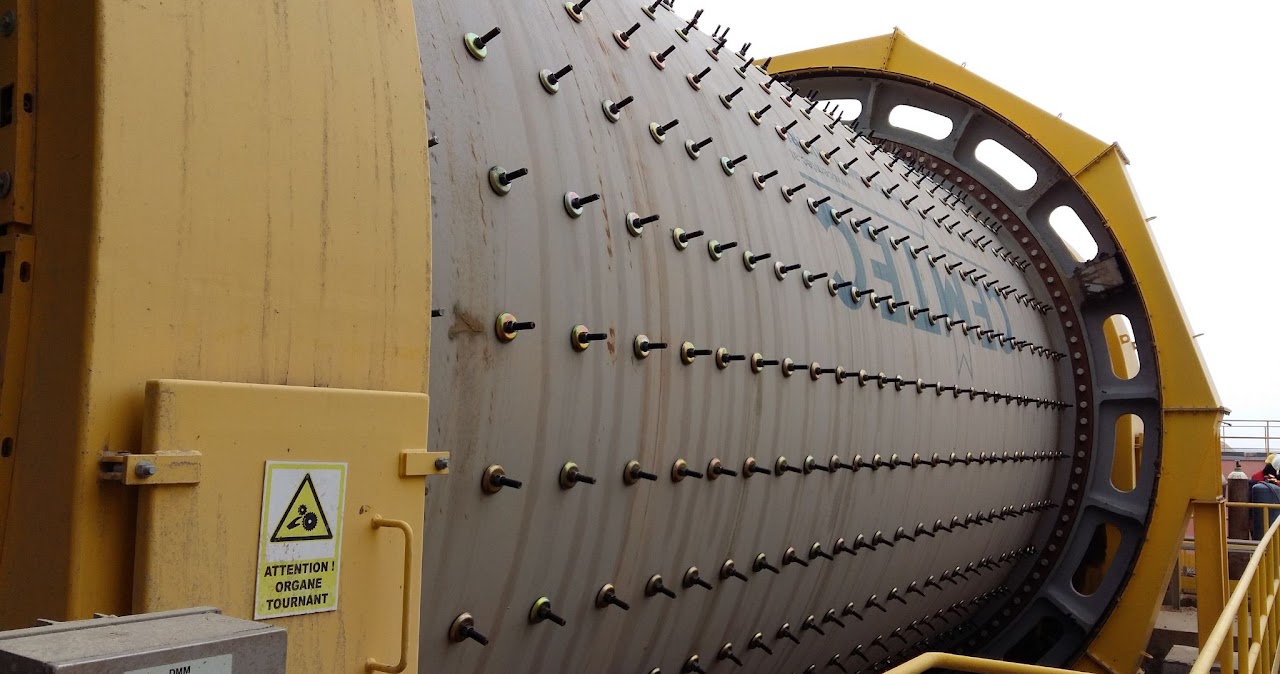
Scrubbers are one of the most common sources of instability in wet plants. Because a scrubber holds material for a significant retention time, it behaves as an integrating process: feed decisions made now show up in the load tens of seconds later. Constant feed control ignores that lag, so plants oscillate — the scrubber alternately starves and overloads, and the disturbance propagates to the wet screens and everything downstream.
The Minealytics Scrubber Load model breaks this cycle by predicting the load before it happens. A time-series neural network learns the dynamics of material retention and scrubbing efficiency from months or years of the plant’s own historian data, using multiple input signals — infeed properties, scrubber speed, drive load, water addition and related process variables — selected through offline data analysis during implementation. The model predicts scrubber load as seen in motor load, oversize fraction and wet-screen load.
The useful prediction horizon and error tolerance are tuned per plant against retention time, available signals and the control objective. The model is only promoted to closed-loop use after comparison with measured load and a site-specific validation period.
Solution: Predictive Feed Control
With a reliable forward view of scrubber load, feed control changes from reactive to anticipatory: the controller acts on where the load is going, not where it was. Oscillation is damped at the source, and downstream units see a steady feed instead of waves.
The same predictive model earns its keep beyond the control loop:
- Control-strategy evaluation: the model provides a benchmark against which alternative control strategies can be scored — in simulation or on live data — before anything is committed to the plant.
- Transparency: feature-attribution analysis shows which inputs drive each prediction and over what time span (see the model-explanation figures), so metallurgists can sanity-check the model against process understanding rather than trust a black box.
- Continuous improvement: predictions are continuously compared with measured load, and the model is recalibrated as ore, liners and operating practice drift.
Technology
Scrubber load prediction is a multivariate time-series forecasting problem: many interacting input signals, strong process lags, and a data-generating process that drifts as ore and equipment condition change. Minealytics maintains a library of forecasting architectures for exactly this class of problem and selects the best performer per application by benchmarking on the plant’s own data.
- Attention-based models (Transformers): one candidate for multivariate forecasting. Attention can weigh the relevance of input signals across past time steps and expose patterns that support model review.
- Temporal Convolutional Networks (TCNs): causal convolutions that see only past and present data, with long effective memory at low computational cost — well suited to fast, deterministic inference on plant-edge hardware.
- Recurrent networks (LSTM / GRU): proven, compact sequence models that remain strong baselines and are often the most robust choice for smaller datasets.
Rather than committing to one architecture, candidate models are trained and benchmarked against each other during implementation (see the architecture-comparison figure), and the winner is deployed with its horizon-versus-accuracy trade-off tuned to the control task. In operation, the deployed model is monitored for drift and retrained on fresh data, so prediction quality holds as the process evolves.
Operating mode
Configured per site
The approved operating mode depends on the site, available data, validation results and safety case. A capability may begin as monitoring or advice, then progress to supervised or closed-loop control. Existing PLC, DCS and safety interlocks remain the final authority on what equipment can do.
Read about deployment and assurance